IMPORTANT ADVICE FOR DAILY PROTECTION FROM JINN, EVIL EYE, MAGIC (SIHR) AND CALAMITIES
SUMMARY OF THE BELOW DAILY PROTECTIONS:
To Be Read After Mughrib (evening) and Fajr (morning) Prays
1. Ayat Al-Kursi - x1
2. Surah Al-Ikhlas - x3
3. Surah Al-Falaq - x3
4. Surah Al Nas - x3
5."أَعُوذُ بِكَلِمَاتِ اللهِ التَّامَّاتِ مِنْ شَرِّ مَا خَلَقَ"- x3
6."بِسْمِ اللهِ الَّذِي لَا يَضُرُّ مَعَ اسْمِهِ شَيْءٌ فِي الْأَرْضِ وَلَا فِي السَّمَاءِ وَهُوَ السَّمِيعُ الْعَلِيمُ". - x3
7."لَا إِلَهَ إِلَّا اللهُ وَحْدَهُ لَا شَرِيكَ لَهُ، لَهُ الْمُلْكُ وَلَهُ الْحَمْدُ، وَهُوَ عَلَى كُلِّ شَيْءٍ قَدِيرٌ" - x 10 (or x100)
8.. "حَسْبِيَ اللهُ لَآ إِلَهَ إِلَّا هُوَ عَلَيْهِ تَوَكَّلْتُ وَهُوَ رَبُّ الْعَرْشِ الْعَظِيمِ"- x7
To Be Read After Duhr, Asr and Isha Pray
1. Aytul Al-Kursi - x1
2. Surah Al-Ikhlas - x1
3.Surah Al-Falaq - x1
4.Surah Al-Nas - x1
To Be Read Before Going To Sleep
(Cup your palms together, blow gently into them with spittle, reciting:)
1. Surah Al-Ikhlas - x1
2. Surah Al-Falaq - x1
3. Surah Al-Nas - x1
(Then pass your hands over as much of your body as you can reach, beginning with the head and the face, then the entire front of your body. Do this three times .)
Then Recite:
4. Aytul Al-Kursi - x1
5. Last 2 verses Surah Al-Baqarah - x1
6. Also according to another narration the verses 1-4, 255 - 257, 284 - 286 all from surah baqarah should be recited in the night.
Important Duas at Other Times
1. Upon entering and leaving the home
2. Upon entering and leaving the toilet
3. When undressing
4. Berfore eating
5. When angry
6. Before sexual intercourse
7. Upon entering or leaving the masjid
8. Before starting anything
Other Important Protective Measures
1. Remaining in wudu at all times, especially before going to sleep
2. Eating 7 ajwa dates on a empty stomach first thing in the morning before breakfast.
3. Perforimg the tahajjad pray - qiyyamu Al-layl (Observing optional salah during the night).
4. Protecting ones new wife from sihr at the time of marriage.
5. Initiating marital life with salat.
6. Giving sadaqa regularly.
7. Establishing all that is obligatory, abstaining from all that is prohibited and repenting from all sins.
8. Reading daily all the morning and evening quranic verses and dua's etc of protection on your self and your children.
9. Daily reading the Quran.
10. Regularly attending lectures to gain Islamic knowledge under ulama and people of piety.
11. Doing plenty of exercise and keeping your self strong, fit and healthy.
Words of rememberance to be read morning (mughrib) and evening (fajr)
All praise is due to Allah alone, and peace and blessings be upon him after whom there is no other Prophet. Reference: Anas (RA) said that he heard the Prophet (SAW) say: "That I sit with people remembering Almighty Allah from the morning (Fajr) prayer until sunrise is more beloved to me than freeing four slaves from among the Children of Isma'il. That I sit with people remembering Allah from the afternoon ('Asr) prayer until the sun sets is more beloved to me than freeing four slaves from among the Children of Isma'il." This was reported by Abu Dawud (no. 3667). Al-Albani graded it good in SahihAbu Dawud 2/698. أَعُوذُ بِاللهِ مِنَ الشَّيْطَانِ الرَّجِيمِ "اللهُ لَا إِلَهَ إِلَّا هُوَ الْحَيُّ الْقَيُّومُ لَا تَأْخُذُهُ سِنَةٌ وَلَا نَوْمٌ لَهُ مَا فِي السَّمَاوَاتِ وَمَا فِي الْأَرْضِ مَنْ ذَا الَّذِي يَشْفَعُ عِنْدَهُ إِلَّا بِإِذْنِهِ يَعْلَمُ مَا بَيْنَ أَيْدِيهِمْ وَمَا خَلْفَهُمْ وَلَا يُحِيطُونَ بِشَيْءٍ مِنْ عِلْمِهِ إِلَّا بِمَا شَاءَ وَسِعَ كُرْسِيُّهُ السَّمَاوَاتِ وَالْأَرْضَ وَلَا يَئُودُهُ حِفْظُهُمَا وَهُوَ الْعَلِيُّ الْعَظِيمُ". 75. 'A 'oothu billaahi minash-Shaytaanir-rajeem. Allaahu laa 'ilaaha 'illaa Huwal-Hayyul-Qayyoom, laa ta'khuthuhu sinatun wa laa nawm, lahu maa fis-samaawaati wa maa fil-'ardh, man thai-lathee yashfa'u 'indahu 'illaa bi'ithnih, ya'lamu maa bayna 'aydeehim wa maa khalfahum, wa laa yuheetoona bishay'im-min 'ilmihi 'illaa bimaa shaa'a, wasi'a kursiyyuhus samaawaati wal'ardh, wa laa ya'ooduhu hifdhuhumaa, wa Huwal- 'Aliyyul- 'Adheem. I seek refuge in Allah from Satan the outcast. - Allah! There is none worthy of worship but He, the Ever Living, the One Who sustains and protects all that exists. Neither slumber nor sleep overtakes Him. To Him belongs whatever is in the heavens and whatever is on the earth. Who is he that can intercede with Him except with His Permission? He knows what happens to them in this world, and what will happen to them in the Hereafter. And they will never encompass anything of His Knowledge except that which He wills. His Throne extends over the heavens and the earth, and He feels no fatigue in guarding and preserving them. And He is the Most High, the Most Great. Reference: Whoever says this when he rises in the morning will be protected from jinns until he retires in the evening, and whoever says it when retiring in the evening will be protected from them until he rises in the morning. It was reported by Al-Hakim 1 / 562, Al-Albani graded it as authentic in Sahihut-Targhib wat-Tarhib 1/273, and traces it to An-Nasa'i and At-Tabarani. He says that At-Tabarani's chain of transmission is reliable (Jayyid). بَسْمِ اللهِ الرَّحْمَنِ الرَّحِيمِ "قُلْ هُوَ اللهُ أَحَدٌ ۞ اللهُ الصَّمَدُ ۞ لَمْ يَلِدْ وَلَمْ يُولَدْ ۞ وَلَمْ يَكُنْ لَهُ كُفُوًا أَحَدٌ" 76. Bismillaahir-Rahmaanir-Raheem. Qul Huwallaahu 'Ahad. Allaahus-Samad. Lam yalid wa lam yoolad. Wa lam yakun lahu kufuwan 'ahad. With the Name of Allah, the Most Gracious, the Most Merciful. Say: He is Allah (the) One. The Self-Sufficient Master, Whom all creatures need, He begets not nor was He begotten, and there is none equal to Him. بَسْمِ اللهِ الرَّحْمَنِ الرَّحِيمِ "قُلْ أَعُوذُ بِرَبِّ الْفَلَقِ ۞ مِنْ شَرِّ مَا خَلَقَ ۞ وَمِنْ شَرِّ غَاسِقٍ إِذَا وَقَبَ ۞ وَمِنْ شَرِّ النَّفَّاثَاتِ فِي الْعُقَدِ ۞ وَمِنْ شَرِّ حَاسِدٍ إِذَا حَسَدَ". Bismillaahir-Rahmaanir-Raheem. Qul 'a'oothu birabbil-falaq. Min sharri ma khalaq. Wa min sharri ghaasiqin 'ithaa waqab. Wa min sharrin-naffaathaati fil-'uqad. Wa min sharri haasidin 'ithaa hasad. With the Name of Allah, the Most Gracious, the Most Merciful. Say: I seek refuge with (Allah) the Lord of the daybreak, from the evil of what He has created, and from the evil of the darkening (night) as it comes with its darkness, and from the evil of those who practice witchcraft when they blow in the knots, and from the evil of the envier when he envies. بَسْمِ اللهِ الرَّحْمَنِ الرَّحِيمِ "قُلْ أَعُوذُ بِرَبِّ النَّاسِ ۞ مَلِكِ النَّاسِ ۞ إِلَهِ النَّاسِ ۞ مِنْ شَرِّ الْوَسْوَاسِ الْخَنَّاسِ ۞ الَّذِي يُوَسْوِسُ فِي صُدُورِ النَّاسِ ۞ مِنَ الْجِنَّةِ وَالنَّاسِ". Bismillaahir-Rahmaanir-Raheem. Qul 'a'oothu birabbin-naas. Malikin-naas. 'Ilaahin-naas. Min sharril-waswaasil-khannaas. Allathee yuwaswisu fee sudoorin-naas. Minal-jinnati wannaas. With the Name of Allah , the Most Gracious , the Most Merciful. Say: I seek refuge with (Allah) the Lord of mankind, the King of mankind , the God of mankind , from the evil of the whisperer who withdraws, who whispers in the breasts of mankind, of jinns and men. (Recite these three times each in Arabic). Reference: Al-Ikhlas 112:1-4. - Al-Falaq 113:1-5. - An-Nas 114:1-6 - Whoever recites these three times in the morning and in the evening, they will suffice him (as a protection) against everything. The Hadith was reported by Abu Dawud 4/322, and At-Tirmithi 5/567. See Al-Albani's Sahih At-Tirmithi 3/182. |
"حَسْبِيَ اللهُ لَآ إِلَهَ إِلَّا هُوَ عَلَيْهِ تَوَكَّلْتُ وَهُوَ رَبُّ الْعَرْشِ الْعَظِيمِ".
83. Hasbiyallaahu laa 'ilaaha 'illaa Huwa 'alayhi tawakkaltu wa Huwa Rabbul-'Arshil-'Adheem .
Allah is sufficient for me . There is none worthy of worship but Him . I have placed my trust in Him, He is Lord of the Majestic Throne . (Recite seven times in Arabic .)
Reference:
Allah will grant whoever recites this seven times in the morning or evening whatever he desires from this world or the next, Ibn As-Sunni (no. 71), Abu Dawud 4/321. Both reports are attributed directly to the Prophet (SWS) (Marfu1). The chain of transmission is sound (Sahih). Ibn As-Sunni.
"بِسْمِ اللهِ الَّذِي لَا يَضُرُّ مَعَ اسْمِهِ شَيْءٌ فِي الْأَرْضِ وَلَا فِي السَّمَاءِ وَهُوَ السَّمِيعُ الْعَلِيمُ".
86. Bismillaahil-lathee laa yadhurru ma'as-mihi shay'un fil-'ardhi wa laa fis-samaa'i wa Huwas-Samee 'ul- 'Aleem .
In the Name of Allah, Who with His Name nothing can cause harm in the earth nor in the heavens, and He is the All-Hearing, the All-Knowing. (Recite three times in Arabic).
Reference:
"Whoever recites it three times in the morning will not be afflicted by any calamity before evening, and whoever recites it three times in the evening will not be overtaken by any calamity before morning." Abu Dawud 4/323, At-Tirmithi 5/465, Ibn Majah 2/332, Ahmad. Ibn Majah's chain of transmission is good (Hasan), Ibn Baz, p. 39.
98. 'A'oothu bikalimaatil-laahit-taammaati min sharri maa khalaqa.
I seek refuge in the Perfect Words of Allah from the evil of what He has created. (Recite three times in Arabic in the evening and morning .)
Reference:
Whoever recites this three times in the evening will be protected from insect stings, Ahmad 2/ 290, An-Nasa'i, 'Amalul-Yawm wal-Laylah no. 590, At-Tirmithi 3/187, Ibn As-Sunni no. 68. According to Al-Albani, Ibn Majah's (2/266) chain of transmission is sound (Sahih), and following Ibn Baz 45, At-Tirmithi's report is good (Hasan).
"لَا إِلَهَ إِلَّا اللهُ وَحْدَهُ لَا شَرِيكَ لَهُ، لَهُ الْمُلْكُ وَلَهُ الْحَمْدُ، وَهُوَ عَلَى كُلِّ شَيْءٍ قَدِيرٌ".
92,93. Laa 'ilaaha 'illallaahu wahdahu laa shareeka lahu, lahul-mulku wa lahul-hamdu, wa Huwa 'alaa kulli shay'in Qadeer.
None has the right to be worshipped but Allah alone, Who has no partner. His is the dominion and His is the praise and He is Able to do all things . (Recite ten times 1 in Arabic or one time to ward off laziness.)2
Reference:
1Allah will write ten Hasanaat (rewards) for whoever recites this ten times in the morning, and forgive him ten misdeeds and give him the reward of freeing ten slaves and protect him from Satan. Whoever recites this ten times in the evening will get this same reward. An-Nasa'i, 'Amalul-Yawm wal-Laylah (no. 24). Its chain of transmission is sound (Sahih). Albani 1/272. Abu Hurayrah (R) narrated that the Prophet (SWS) said: "Allah will write one hundred Hasanat for whoever says There is no God but Allah alone, He has no partner. To Allah is possession of everything, and to Him all praise is. He is Capable of all things' ten times in the morning, and forgive him one hundred misdeeds. He will have the reward of freeing a slave and will be protected from Satan throughout the day unto dusk. Whoever says it in the evening will have the same reward." Ahmad 8/704, 16/293. Its chain of transmission is good (Hasan), Ibn Baz, p. 44.
2 Whoever recites this in the morning, will have the reward of freeing a slave from the Children of Isma'il. Ten Hasanaat (rewards) will be written for him, and he will be forgiven ten misdeeds, raised up ten degrees, and be protected from Satan until evening. Whoever says it in the evening will have the same reward until morning. Abu Dawud 4/319, 3/957, Ahmad 4/ 60, Ibn Majah 2/331, Ibn Al-Qayyim Zadul-Ma'ad 2/388. Its chain of transmission is sound (Sahih). Al-Albani 1/270.
To read after Dhuhr, Asr and Isha pray
أَعُوذُ بِاللهِ مِنَ الشَّيْطَانِ الرَّجِيمِ "اللهُ لَا إِلَهَ إِلَّا هُوَ الْحَيُّ الْقَيُّومُ لَا تَأْخُذُهُ سِنَةٌ وَلَا نَوْمٌ لَهُ مَا فِي السَّمَاوَاتِ وَمَا فِي الْأَرْضِ مَنْ ذَا الَّذِي يَشْفَعُ عِنْدَهُ إِلَّا بِإِذْنِهِ يَعْلَمُ مَا بَيْنَ أَيْدِيهِمْ وَمَا خَلْفَهُمْ وَلَا يُحِيطُونَ بِشَيْءٍ مِنْ عِلْمِهِ إِلَّا بِمَا شَاءَ وَسِعَ كُرْسِيُّهُ السَّمَاوَاتِ وَالْأَرْضَ وَلَا يَئُودُهُ حِفْظُهُمَا وَهُوَ الْعَلِيُّ الْعَظِيمُ".
75. 'A 'oothu billaahi minash-Shaytaanir-rajeem. Allaahu laa 'ilaaha 'illaa Huwal-Hayyul-Qayyoom, laa ta'khuthuhu sinatun wa laa nawm, lahu maa fis-samaawaati wa maa fil-'ardh, man thai-lathee yashfa'u 'indahu 'illaa bi'ithnih, ya'lamu maa bayna 'aydeehim wa maa khalfahum, wa laa yuheetoona bishay'im-min 'ilmihi 'illaa bimaa shaa'a, wasi'a kursiyyuhus samaawaati wal'ardh, wa laa ya'ooduhu hifdhuhumaa, wa Huwal- 'Aliyyul- 'Adheem.
I seek refuge in Allah from Satan the outcast. - Allah! There is none worthy of worship but He, the Ever Living, the One Who sustains and protects all that exists. Neither slumber nor sleep overtakes Him. To Him belongs whatever is in the heavens and whatever is on the earth. Who is he that can intercede with Him except with His Permission? He knows what happens to them in this world, and what will happen to them in the Hereafter. And they will never encompass anything of His Knowledge except that which He wills. His Throne extends over the heavens and the earth, and He feels no fatigue in guarding and preserving them. And He is the Most High, the Most Great. (to be read once)
بَسْمِ اللهِ الرَّحْمَنِ الرَّحِيمِ "قُلْ هُوَ اللهُ أَحَدٌ ۞ اللهُ الصَّمَدُ ۞ لَمْ يَلِدْ وَلَمْ يُولَدْ ۞ وَلَمْ يَكُنْ لَهُ كُفُوًا أَحَدٌ"
76. Bismillaahir-Rahmaanir-Raheem. Qul Huwallaahu 'Ahad. Allaahus-Samad. Lam yalid wa lam yoolad. Wa lam yakun lahu kufuwan 'ahad.
With the Name of Allah, the Most Gracious, the Most Merciful. Say: He is Allah (the) One. The Self-Sufficient Master, Whom all creatures need, He begets not nor was He begotten, and there is none equal to Him.
بَسْمِ اللهِ الرَّحْمَنِ الرَّحِيمِ "قُلْ أَعُوذُ بِرَبِّ الْفَلَقِ ۞ مِنْ شَرِّ مَا خَلَقَ ۞ وَمِنْ شَرِّ غَاسِقٍ إِذَا وَقَبَ ۞ وَمِنْ شَرِّ النَّفَّاثَاتِ فِي الْعُقَدِ ۞ وَمِنْ شَرِّ حَاسِدٍ إِذَا حَسَدَ".
Bismillaahir-Rahmaanir-Raheem. Qul 'a'oothu birabbil-falaq. Min sharri ma khalaq. Wa min sharri ghaasiqin 'ithaa waqab. Wa min sharrin-naffaathaati fil-'uqad. Wa min sharri haasidin 'ithaa hasad.
With the Name of Allah, the Most Gracious, the Most Merciful. Say: I seek refuge with (Allah) the Lord of the daybreak, from the evil of what He has created, and from the evil of the darkening (night) as it comes with its darkness, and from the evil of those who practice witchcraft when they blow in the knots, and from the evil of the envier when he envies.
بَسْمِ اللهِ الرَّحْمَنِ الرَّحِيمِ "قُلْ أَعُوذُ بِرَبِّ النَّاسِ ۞ مَلِكِ النَّاسِ ۞ إِلَهِ النَّاسِ ۞ مِنْ شَرِّ الْوَسْوَاسِ الْخَنَّاسِ ۞ الَّذِي يُوَسْوِسُ فِي صُدُورِ النَّاسِ ۞ مِنَ الْجِنَّةِ وَالنَّاسِ".
Bismillaahir-Rahmaanir-Raheem. Qul 'a'oothu birabbin-naas. Malikin-naas. 'Ilaahin-naas. Min sharril-waswaasil-khannaas. Allathee yuwaswisu fee sudoorin-naas. Minal-jinnati wannaas.
With the Name of Allah , the Most Gracious , the Most Merciful. Say: I seek refuge with (Allah) the Lord of mankind, the King of mankind , the God of mankind , from the evil of the whisperer who withdraws, who whispers in the breasts of mankind, of jinns and men.
(Recite these once each in Arabic).
What to say before sleeping
(Cup your palms together, blow gently into them with spittle reciting:) بَسْمِ اللهِ الرَّحْمَنِ الرَّحِيمِ "قُلْ هُوَ اللهُ أَحَدٌ ۞ اللهُ الصَّمَدُ ۞ لَمْ يَلِدْ وَلَمْ يُولَدْ ۞ وَلَمْ يَكُنْ لَهُ كُفُوًا أَحَدٌ" 99. Bismillaahir-Rahmaanir-Raheem. Qul Huwallaahu 'Ahad. Allaahus-Samad. Lam yalid wa lam. yoolad. Wa lam yakun lahu kufuwan 'ahad. With the Name of Allah, the Most Gracious, the Most Merciful . Say : He is Allah (the) One . The Self-Sufficient Master, Whom all creatures need, He begets not nor was He begotten , and none is equal to Him . بَسْمِ اللهِ الرَّحْمَنِ الرَّحِيمِ "قُلْ أَعُوذُ بِرَبِّ الْفَلَقِ ۞ مِنْ شَرِّ مَا خَلَقَ ۞ وَمِنْ شَرِّ غَاسِقٍ إِذَا وَقَبَ ۞ وَمِنْ شَرِّ النَّفَّاثَاتِ فِي الْعُقَدِ ۞ وَمِنْ شَرِّ حَاسِدٍ إِذَا حَسَدَ". Bismillaahir-Rahmaanir-Raheem. Qul 'a'oothu birabbil-falaq. Min sharri maa khalaq. Wa min sharri ghaasiqin 'ithaa waqab. Wa min sharrin-naffaathaati fil-'uqad. Wa min sharri haasidin 'ithaa hasad. With the Name of Allah, the Most Gracious, the Most Merciful. Say: I seek refuge with (Allah) the Lord of the daybreak, from the evil of what He has created, and from the evil of the darkening (night) as it comes with its darkness, and from the evil of those who practice witchcraft when they blow in the knots, and from the evil of the envier when he envies. بَسْمِ اللهِ الرَّحْمَنِ الرَّحِيمِ "قُلْ أَعُوذُ بِرَبِّ النَّاسِ ۞ مَلِكِ النَّاسِ ۞ إِلَهِ النَّاسِ ۞ مِنْ شَرِّ الْوَسْوَاسِ الْخَنَّاسِ ۞ الَّذِي يُوَسْوِسُ فِي صُدُورِ النَّاسِ ۞ مِنَ الْجِنَّةِ وَالنَّاسِ". Bismillaahir-Rahmaanir-Raheem. Qul 'a'oothu birabbin-naas . Malikin-naas . 'Ilaahin-naas . Min sharril-waswaasil-khannaas . Allathee yuwaswisu fee sudoorin-naas . Minal-jinnati wannaas . With the Name of Allah , the Most Gracious , the Most Merciful. Say: I seek refuge with (Allah) the Lord of mankind, the King of mankind , the God of mankind , from the evil of the whisperer who withdraws , who whispers in the breasts of mankind, of jinns and men . (Then pass your hands over as much of your body as you can reach, beginning with the head and the face, then the entire front of your body. Do this three times .) Reference: Al-Bukhari, cf. Al-Asqalani, Fathul-Bari 9/62, and Muslim 4/ 1723. "اللهُ لَا إِلَهَ إِلَّا هُوَ الْحَيُّ الْقَيُّومُ لَا تَأْخُذُهُ سِنَةٌ وَلَا نَوْمٌ لَهُ مَا فِي السَّمَاوَاتِ وَمَا فِي الْأَرْضِ مَنْ ذَا الَّذِي يَشْفَعُ عِنْدَهُ إِلَّا بِإِذْنِهِ يَعْلَمُ مَا بَيْنَ أَيْدِيهِمْ وَمَا خَلْفَهُمْ وَلَا يُحِيطُونَ بِشَيْءٍ مِنْ عِلْمِهِ إِلَّا بِمَا شَاءَ وَسِعَ كُرْسِيُّهُ السَّمَاوَاتِ وَالْأَرْضَ وَلَا يَئُودُهُ حِفْظُهُمَا وَهُوَ الْعَلِيُّ الْعَظِيمُ". 100. Allaahu laa 'ilaaha 'illaa Huwal-Hayyul-Qayyoom, laa ta'khuthuhu sinatun wa laa nawm, lahu maa fis-samaawaati wa maa fil-'ardh, man thal-lathee yashfa'u 'indahu 'illaa bi'ithnihi, ya'lamu maa bayna 'aydeehim wa maa khalfahum, wa laa yuheetoona bishay'im-min 'ilmihi 'illaa bimaa shaa'a, wasi'a kursiyyuhus-samaawaati wal'ardha, wa laa ya'ooduhu hifdhuhumaa, wa Huwal- 'Aliyyul- 'Adheem. Allah! There is no God but He, the Ever Living, the One Who sustains and protects all that exists. Neither slumber nor sleep overtakes Him. To Him belongs whatever is in the heavens and whatever is on the earth. Who is he that can intercede with Him except with His Permission? He knows what happens to them in this world, and what will happen to them in the Hereafter. And they will never encompass anything of His Knowledge except that which He wills. His Throne extends over the heavens and the earth, and He feels no fatigue in guarding and preserving them. And He is the Most High, the Most Great. Reference: Al-Baqarah 2:255. Whoever reads this when he lies down to sleep will have a guardian from Allah remain with him and Satan will not be able to come near him until he rises in the morning. See Al-Bukhari, cf. Al-Asqalani, Fathul-Bari 4/487. "آمَنَ الرَّسُولُ بِمَا أُنْزِلَ إِلَيْهِ مِنْ رَبِّهِ وَالْمُؤْمِنُونَ كُلٌّ آمَنَ بِاللهِ وَمَلَائِكَتِهِ وَكُتُبِهِ وَرُسُلِهِ لَا نُفَرِّقُ بَيْنَ أَحَدٍ مِنْ رُسُلِهِ وَقَالُوا سَمِعْنَا وَأَطَعْنَا غُفْرَانَكَ رَبَّنَا وَإِلَيْكَ الْمَصِيرُ ۞ لَا يُكَلِّفُ اللهُ نَفْسًا إِلَّا وُسْعَهَا لَهَا مَا كَسَبَتْ وَعَلَيْهَا مَا اكْتَسَبَتْ رَبَّنَا لَا تُؤَاخِذْنَا إِنْ نَسِينَا أَوْ أَخْطَأْنَا رَبَّنَا وَلَا تَحْمِلْ عَلَيْنَا إِصْرًا كَمَا حَمَلْتَهُ عَلَى الَّذِينَ مِنْ قَبْلِنَا رَبَّنَا وَلَا تُحَمِّلْنَا مَا لَا طَاقَةَ لَنَا بِهِ وَاعْفُ عَنَّا وَاغْفِرْ لَنَا وَارْحَمْنَا أَنْتَ مَوْلَانَا فَانْصُرْنَا عَلَى الْقَوْمِ الْكَافِرِينَ" 101: 'Aamanar-Rasoolu bimaa 'unzila mir-Rabbihi walmu'minoon, kullun 'aamana billaahi wa malaa'ikatihi wa Kutubihi wa Rusulihi, laa nufarriqu bayna 'ahadim-mir-Rusulihi, wa qaaloo sami'naa wa 'ata'naa ghufraanaka Rabbanaa wa 'ilaykal-maseer. Laa yukallifullaahu nafsan 'illaa wus'ahaa, lahaa maa kasabat wa 'alayhaa mak-tasabat, Rabbanaa laa tu'aakhithnaa 'in naseenaa 'aw 'akhta'naa, Rabbanaa wa laa tahmil 'alaynaa 'isran kamaa hamaltahu 'alal-latheena min qablinaa, Rabbanaa wa laa tuhammilnaa maa laa taaqata lanaa bihi, wa'fu 'annaa, waghfir lanaa warhamnaa, 'Anta Mawlaanaa fansurnaa 'alal-qawmil-kaafireen. The Messenger believes in what has been send down to him from his Lord, and so do the believers. Each one believes in Allah, His Angels, His Books, and His Messengers. They say: "We make no distinction between any of His Messengers," and they say: "We hear, and we obey. (We seek) Your Forgiveness, our Lord, and to You is the return." Allah burdens not a person beyond what he can bear. He gets reward for that (good) which he has earned, and he is punished for that (evil) which he has earned. Our Lord! Punish us not if we forget or fall into error. Our Lord! Lay not on us a burden like that which You did lay on those before us. Our Lord! Put not on us a burden greater than we have strength to bear. Pardon us and grant us forgiveness. Have mercy on us. You are our Protector, and help us against the disbelieving people. Reference: Al-Baqarah 2:285-6. These two Verses will be sufficient for anyone who recites them at night before sleeping. Al-Bukhari, cf. Al-Asqalani, Fathul-Bari.9/94, Muslim 1/554. Also reciting ten verses from Sural al-Baqarah due to the narration of Ibn Mas'ud (R), and has the ruling of a hadith of the Messenger of Allah (SWT). He said: "Whosoever recites ten verses from Surah al-Baqarah in the night, then shaytan will not enter the house that night untill the morning approaches: four from the beginning (1-4), Aya al-Kursi and the two verses after it (255-257), and the three verses at the end (284-286) - the first of which begins 'And to Him belongs whatsoever is in the Heavens...'''' - And in one narration-: "neither shaytaan or anything that he dislikes will come near him nor his family that day, and it (al-Baqarah) is not recited upon a madman except that he comes to (he will recover from his illness"). (Al-Darimi and al-Tabarani in al-Kabir; al-Haythami said in al-Majma, that the narrators (in the chain) are upright. |
When anyone of you begins eating, say:

178. Bismillaah.
With the Name of Allah.
And if you forget then, when you remember, say:
Bismillaahifee 'awwalihi wa 'aakhirihi.
With the Name of Allah, in the beginning and in the end.
Reference: Abu Dawud 3/347, At-Tirmithi 4/288. See Al- Albani's Sahih At-Tirmithi 2/167.
The prophet (SWS) said: "Every important matter which is not begun by saying 'bismillahir-rahmanir-rahim' is cut of (from bessing)". (Al-Nawawi declared it hasan in al-Adhkar.
Invocation for anger
193. 'A'oothu billaahi minash-Shaytaanir-rajeem . I seek refuge in Allah from Satan the outcast from that which You provide for us. Reference: Al-Bukhari 7/99, Muslim 4/2015. |

What to say when entering the home
"بِسْمِ اللهِ وَلَجْنَا، وَ بِسْمِ اللهِ خَرَجْنَا، وَعَلَى رَبِّنَا تَوَكَّلْنَا". 18. Bismillaahi walajnaa, wa bismillaahi kharajnaa, wa 'alaaRabblnaa tawakkalnaa In the Name of Allah we enter , in the Name of Allah we leave , and upon our Lord we depend [then say As-Salaamu 'Alaykum to those present]. Reference: Abu Dawud 4/325. Muslim {Hadith no. 2018) says that one should mention the Name of Allah when entering the home and when beginning to eat; and that the devil hearing this, says: "There is no shelter for us here tonight and no food." (must enter with right foot reading above dua) |
What to say when leaving the home
"بِسْمِ اللهِ، تَوَكَّلْتُ عَلَى اللهِ، وَلَا حَوْلَ وَلَا قُوَّةَ إِلَّا بِاللهِ". 16. Bismillaahi, tawakkaltu 'alallaahi, wa laa hawla wa laa quwwata ‘ illaa billaah. In the Name of Allah, I have placed my trust in Allah, there is no might and no power except by Allah. Reference: Abu Dawud 4/325, At-Tirmithi 5/490. See also Al-Albani, Sahih At-Tirmithi 3/151. (must leave with left foot reading above dua) In the narration of Anas (R): "He who says upon leaving his house: Bismillah tawakkaltu 'alal-lahi, la hawla wa la quwwwata illa billah. (In the name of Allah - I have put my trust in Allah, there is no strength or power except with Allah). It is said to him: 'All your requirements have been met for you, you have been protected and you have been guided'; the devil turns away from him and says to another devil: "What can you do with a man who has been guided, who has been satiated and who has been protected?''' (al-Tirmidhi). |
Invocation for entering the restroom
"[بِسْمِ اللهِ] اللَّهُمَّ إِنِّي أَعُوذُ بِكَ مِنَ الْخُبُْثِ وَالْخَبَائِثِ". 10. [Bismillaahi] Allaahumma 'innee 'a'oothu bika minal-khubthi walkhabaa'ith. (Before entering) [In the Name of Allah] . (Then) O Allah , I seek protection in You from the male and female unclean spirits. Reference: Al-Bukhari 1/45, Muslim 1/283. The addition of Bismillah at its beginning was reported by Said bin Mansur. See Fathul-Bari 1/244 |
Invocation for leaving the restroom (bathroom/toilet)
"غُفْرَانَكَ". 11. Ghufraanaka I seek Your forgiveness. Reference: Abu Dawud, Ibn Majah and At-Tirmithi. An-Nasa'i recorded it in 'Amalul-Yawm wal-Laylah. Also see the checking of Ibn Al-Qayyim's Zadul-Ma'ad, 2/387. |
Invocation to be recited before intercourse
192. Bismillaah. Allaahumma jannibnash-Shaytaana, wa jannibish-Shaytaana maa razaqtanaa. With the Name of Allah. O Allah, keep the Devil away from us and keep the Devil away from that which You provide for us. Reference: Al-Bukhari 6/141, Muslim 2/1028. Ibn 'Abbas (RA) reported: "The Prophet (Peace and Blessing upon Him) said, 'If you say the following invocation during sexual intercourse, and a baby is conceived, Satan would never harm that baby." |

Invocation for entering the mosque
"أَعُوذُ بِاللهِ الْعَظِيمِ، وَبِوَجْهِهِ الْكَرِيمِ، وَسُلْطَانِهِ الْقَدِيمِ، مِنَ الشَّيْطَانِ الرَّجِيمِ". [بِسْمِ اللهِ، وَالصَّلَاةُ وَالسَّلَّامُ عَلَى رَسُولِ اللهِ] "اللَّهُمَّ افْتَحْ لِي أَبْوَابَ رَحْمَتِكَ". 20. 'A'oothu billaahil-'Adheem, wa bi-Wajhihil-Kareem, wa Sultaanihil-qadeem, minash-Shaytaanir-rajeem. [Bismillaahi, wassalaatu.] [Wassalaamu 'alaaRasoolillaahi.] Allaahum-maftah lee 'abwaaba rahmatika. I seek refuge in Almighty Allah, by His Noble Face, by His primordial power, from Satan the outcast.1 [In the Name of Allah, and blessings.]2 [And peace be upon the Messenger of Allah.]3 O Allah, open before me the doors of Your mercy.4 Reference: Or You may read: A'udu billahi al-' az imi, wa biwajhihi al-karimi, wa sultanihi al-qadimi mina asshaytani ar-rajimi I seek refuge in Allah, the All-Magnificent, His Face the All-Glorious, and His Sovereignty the All-Antiquated, from Satan the outcast. It is confirmed that the Prophet entering the mosque said, "Whenever a Muslim says the above invocation, Satan says, 'He is defended against me for the rest of the day.'" Abu Dawud: 1/127 |
Invocation for leaving the mosque
"بِسْمِ اللهِ، وَالصَّلَاةُ وَالسَّلَّامُ عَلَى رَسُولِ اللهِ، اللَّهُمَّ إَنِّي أَسْأَلُكَ مِنْ فَضْلِكَ، اللَّهُمَّ اعصِمْنِي مِنَ الشَّيْطَانِ الرَّجِيمِ". 21. Bismillaahi wassalaatu wassalaamu 'alaa Rasoolillaahi, Allaahumma 'innee 'as'aluka min fadhlika, Allaahumma'simnee minash-Shaytaanir-rajeem. In the Name of Allah, and peace and blessings be upon the Messenger of Allah. O Allah, I ask for Your favor, O Allah, protect me from Satan the outcast. Reference: ibid. |
THE ABOVE IS VERY IMPORTANT FOR DAILY
PROTECTION
OTHER PROTECTIVE (DETAILED) MEASURES
Al-Wudhu
Sihr does not affect a person in a state of wudhu, for he is protected by an angel sent by the Merciful (Allah). Ibn 'Abbas (RA) reported: "The Prophet (Peace and Blessing upon Him) said: 'Wash these bodies, and Allah ('Azza wa Jalla) will wash you. There is not a servant who sleeps in a state of wudhu, but that an angel accompanies him in his clothes; and there is not a moment that he moves in bed, but that the angel says: 'O Allah! Forgive Your Servant, for he has slept in a clean state."
Transmitted by At-Tabarani in Al-Awsat. According to Al-Mundiri, the chain of transmission is very good (At-Targhib: 2/13)
Observing Congregational Salah
Observing salat in congregation secures a Muslim person from Satan, and neglecting it makes Satan dominate him. And if Satan dominates a person, he harms him with sihr and other things which he can easily do. Abu Ad-Darda (RA) reported: "I heard the Prophet (Peace and Blessing upon Him) say: 'There are not three people in a town or in the countryside who do not observe congregational salat, but that Satan dominates them. Remain with the community, for the wolf seizes the solitary sheep moving away from the flock.'" Al-Bukhari: (Fath Al-Bari 3/34) and Muslim: (An-Nawawi: 6/63).
Qiyyamu Al-layl (observing optional salat during the night)
Whosoever wishes to protect himself against sihr should observe salat during the night. Neglecting it allows Satan to dominate a man. If he does, then you will make yourself a hot bed for the effect of sihr on you. Ibn Mas'ud (RA) reported: "When the Prophet (Peace and Blessing upon Him) was asked about his opinion of a man who slept until salatul Fajr, without waking up for qiyyamul-layl, he said that Satan urinated in the man's ear.'" Abu Dawud: 1/150 (a sound chain of transmission).
Sa'id Ibn Mansur reported : "Ibn 'Umar (RA) said, 'Not a man wakes up in the morning without having observed salatul-witr, but that a rope measuring approximately seventy cubits will be put over his head in the morning."' According to Al-Hafiz, a very good chain of transmission (Fath: 3/25)
Seeking Refuge With Allah (SWT) Upon Starting Salah
Jubayr Ibn Mut'im reported: "I saw the Prophet (Peace and Blessing upon Him) say: (Allahu akbaru kabira, walhamdu lillahi kathira, wa subhanallahi bukratan wa asila)
Three times
A'uzu billahi mina shaytani rajimi min nafkhihi wa nafthihi wa hamzihi
(Allah ('Azza wa Jalla) is the Greatest, much Praise be to Allah if, and Glory be to Allah if in the morning and in the evening. I seek refuge with Allah ('Azza wa Jalla) from the Satan's arrogance, poetry, epilepsy and lunacy.) Abu Dawud (1/203); classed by Al-Albani as authentic.
Protecting One's New Wife Against Sihr at the Time of Marriage
Soon after concluding the marriage contract, put your right hand upon her forehead and say:
Allahumma inni as'aluka khayraha wa khayra ma jabaltha 'alayhi, wa a 'uzu bika min sharriha wa sharri ma jabaltha 'alayhi
O Allah! I ask you for any good that may come from her and any good that You have created in her natural disposition, and seek refuge with you from any evil that may come from her, and any evil that You have created in her natural disposition. Abi Dawud; according to Al-Albani, a sound chain of transmission (151)
Initiating Marital Life With Salah
'Abdullah Ibn Mas'ud (RA) said: "On your wedding night; that is on the night when the marriage is to be consummated for the first time; and before intercourse, do two rak'as and ask your wife to follow suit behind you, and say the following invocation:
Allahumma barik li fi ahli, wa barik lahum fiyya, allahumma ijma' bay nana ma jama 'ta bikhayr, wa farriq bay nana iza farraqta bikhayr
O Allah! Make my wife blessed for me and make me blessed for her. O Allah! If You unite us, unite us on what is good, and if you separate us, separate us on what is good.
Transmitted by At-Tabarani, and classed by Al-Albani as authentic.
Eating Dates
Eat seven pressed dates in the morning before eating any food if you can. Dates should preferably be from Al-Madinah. If this is not possible, then eat any pressed dates. The Prophet SAW said, "Whoever eats seven pressed dates every morning before eating any food, will not be affected by poison or sihr!"
Al-Bukhari: 10/249, the Book of Medicine, Chapter: Treatment of sorcery with 'Ajwah.
'Ajwah: a kind of date grown in Madinah
Al-Bukhari narrated in his Sahih from 'Amir ibn Sa'd that his father said: The Prophet (Peace and Blessing upon Him) said:
"Whoever eats 'Ajwah dates every morning will not be harmed by poison or witchcraft all that day until night comes." Fath Al-Bari, 10/249.
Someone else said: "Seven dates." And according to another report:
"Whoever eats seven 'Ajwah dates in the morning, will not be harmed that day by poison or witchcraft."
Whoever persists in eating 'Ajwah dates on an empty stomach, with the proper intention and with trust in Allah and the words of the Prophet (Peace and Blessing upon Him) will be as it were inoculated against witchcraft, and neither witchcraft nor poison will harm him. Some of the scholars explained that one of the characteristics of dates is that they are "hot", and that this is sufficient to ward off disease, but the Prophet (Peace and Blessing upon Him) mentioned specific protection against witchcraft. It seems, and Allah knows best, that dates contain something unknown to us that protects against poison and witchcraft. We believe in the word of the truthful one (the Prophet SAW), even if we do not know how that works. There is no doubt that the dates of Madinah possess special qualities, but if dates of Madinah are not available, then any dates will do Insha Allah.
Saying Bismillah When Eating and Drinking
It was narrated that 'Umar ibn Abi Salamah (RA) said: The Messenger of Allah (Peace and Blessing upon Him) said:
"Say Bismillah and eat with your right hand." Fath Al-Bari, 7/88. Muslim, 3/1599, no. 108.
It was narrated that Jabir (RA) said: I heard the Messenger of Allah (Peace and Blessing upon Him) say:
"When a man enters his house and remembers Allah upon entering and when eating, the Shaytan says: 'You have no place to stay and no dinner.' If he enters and does not remember Allah upon entering, the Shaytan says: 'You have found a place to stay.' And if he does not remember Allah when eating, he says: 'You have found a place to stay and dinner.'" Sahih Muslim, 3/1598, no. 103.
It was narrated that Hudhayfah (RA) said: When we ate with the Prophet (Peace and Blessing upon Him), we would not stretch forth our hands until the Messenger of Allah (Peace and Blessing upon Him) stretched forth his hand first. We were going to eat with him one time, when a young girl came rushing as if she were being pushed. She went to stretch forth her hand to the food, but the Messenger of Allah (Peace and Blessing upon Him) took hold of her hand. Then a Bedouin came rushing as if he were being pushed, and he took hold of his hand. Then the Messenger of Allah (Peace and Blessing upon Him) said:
"The Shaytan regards food as permissible (for himself) if the Name of Allah is not mentioned over it. He brought this girl so that the food might become permissible for him through her, but I took her hand. Then he brought this Bedouin so that the food might become permissible for him through him, but I took his hand. By the One in Whose hand is my soul, his hand is in mine along with her hand." Sahih Muslim, Kitab Al-Ashribah, 3/1597, no. 102.
Then he mentioned the Name of Allah and began to eat.
It was narrated that the Sahabi Umayyah ibn Makhshi (RA) said: The Messenger of Allah (Peace and Blessing upon Him) was sitting and a man was eating who did not mention the Name of Allah until there was only one morsel left of his food. When he raised it to his mouth, he said: "In the Name of Allah at the beginning and at the end of it." The Prophet laughed and said: The Shaytan kept eating along with him, but when he mentioned the Name of Allah, he (the Shaytan) vomited what was in his belly." Sunan Abu Dawud, 3/140, no. 3768; Al-Nasa'i, 'Ami Al-Yawm Wa'l-Laylah, p. 102, no. 283.
Do you not see the importance of mentioning the Name of Allah when you start to eat or drink? The scholars (may Allah have mercy on them) are unanimously agreed that it is Mustahabb to mention the name of Allah when one starts to eat or drink, but if a person omits to do so for some reason then becomes able to do so whilst eating, it is Mustahabb to say "Bismillahi awwalahu wa akhirahu (In the Name of Allah at the beginning and at the end)." It is also Mustahabb to say it out loud so as to remind others and set an example for them.
It is Mustahabb to say when entering one's house:
'Bismillah as-salamu 'alaykum'
In the Name of Allah, peace be upon you,' whether there are any humans in the house or not, because Allah says:
"But when you enter the houses, greet one another with a greeting from Allah (i .e. say: As-salamu 'alaykum — peace be on you), blessed and good." (Al-Nur 24:61)
It was narrated that Anas said: The Messenger of Allah (Peace and Blessing upon Him) said:
"O my son, when you enter upon your family, greet them with Salam; it will be a blessing from Allah upon you and upon the people of your household.' Sunan Al-Tirmidhi, Bab Maja'a Fi'l-taslim Idha Dakhala Baytihi.
It was narrated that Abu Malik Al-Ash'ari (RA) said: The Messenger of Allah (Peace and Blessing upon Him) said: "When a man enters his home, let him say:
"Allahumma inni as aluka khayra Al-mawlij wa khayr Al-makhraj, bismillahi walajna wa bismillahi kharajna, wa 'ala Allahi rabbina tawakkalna (O Allah, I ask of You the best entering and the best exit. In the Name of Allah we have entered and in the Name of Allah we have exited, and in Allah our Lord have we put our trust) then let him greet his family with Salaam. Sunan Abi Dawud, Kitab Al-Adab, 5/328, no. 5096; classed as Sahih by Al-Albani (may Allah have mercy on him).
It was narrated that Jabir ibn 'Abdullah (RA) said: I heard the Messenger of Allah (Peace and Blessing upon Him) say:
"When a man enters his house and mentions Allah when he enters and when he eats, the Shaytan says: '(You have) no place to stay and no supper.' If he enters and does not mention Allah when he eats, (the Shaytan) says: 'You have found a place to stay and supper.'" Sahih Muslim, 3/1598, no. 103.
In the Muwatta of Imam Malik it is narrated that he heard that it is Mustahabb when entering an uninhabited house to say:
"As-salamu 'alayna wa 'ala 'ibad-illah il-salihin (Peace be upon us and upon the righteous slaves of Allah)." Al-Muwatta', Kitab Al-Salam, Bab Jami' Al-Salam, vol. 2, p. 962, no. 8.
What a Person Should Do and Say When He Gets Angry
Anger is one of the evil whispers of the Shaytan. Allah says:
(And if an evil whisper from Shaytan (Satan) tries to turn you away (O Muhammad) (from doing good), then seek refuge in Allah. Verily, He is the All Hearer, the All Knower.) (Fussilat 41:36)
It was narrated that the Companion of the Prophet (Peace and Blessing upon Him) Sulayman ibn Surad (RA) said: I was sitting with the Prophet (Peace and Blessing upon Him) and two men traded insults. One of them turned red in the face and became furious, and the Messenger of Allah (Peace and Blessing upon Him) said:
"I know a word which, if he said it, what he is experiencing would go away. If he said, A'udhu billahi min As-shaytan il- rajim (I seek refuge with Allah from the accursed Shaytan),' what he is experiencing would go away."
They said to him: "The Prophet (Peace and Blessing upon Him) said:
"Seek refuge with Allah from the accursed Shaytan."
He said: "Am I insane?" Fath Al-Bari, Kitab Bad' Al-Khalq, Bab Sifat Iblis, 6/151; Sahih Muslim, 4/5/20, no. 109
It was narrated that 'Aishah (RA) said: The Prophet (Peace and Blessing upon Him) entered upon me when I was angry. He took hold of the end my nose and tweaked it, then he said:
"O 'Uwayyish (diminutive form of 'Aishah), say: Allahumma aghfir li dhanbi wa adhhib ghayda qalbi, wa ajirni min As-Shaytan (O Allah, forgive my sin, take away the anger in my heart, and protect me against the Shaytan)."
It was narrated that the Companion of the Prophet (Peace and Blessing upon Him) 'Atiyyah ibn 'Urwah Al-Sa'di (RA) said: The Messenger of Allah (Peace and Blessing upon Him) said:
"Anger comes from the Shaytan, and the Shaytan was created from fire. Fire is extinguished by water, so if one of you becomes angry, let him do Wudu." Sunan Abi Dawud, Kitab Al-Adab 5
It is Mustahabb for the one whom the Shaytan provokes to anger to suppress his anger and to seek refuge with Allah from the accursed Shaytan. Then he should hasten to do Wudu, and remember that the reward with Allah for suppressing his anger is great.
It was narrated from the Companion of the Prophet (Peace and Blessing upon Him) Mu'adh ibn Anas Al-Juhani (RA) that the Prophet (Peace and Blessing upon Him) said:
"Whoever suppresses his anger when he is able to act upon it, Allah will call him before all creatures on the Day of Resurrection and let him choose whoever he wants from among Al-Hur." Sunan Abi Dawud, Kitab Al-Adab, 5/137, no. 4777; Sunan Al-Tirmidhi, Kitab Al-Birr, no. 2022. [2] Sahih Al-Bukhari, Kitab Al-Anbiya', 4/179.
What to be Said by One Suffering From Loneliness
It was narrated from Al-Walid ibn Al-Walid (RA) that he said: "O Messenger of Allah, I feel lonely." He said: "When you go to bed, say:
"A'udhu bi kalimat-illah il-tammati min ghada-bihi wa 'iqabihi wa min sharri 'ibadihi wa min hamazat As-shayatin wa an yahdurun (I seek refuge in the perfect words of Allah from His wrath and punishment, and from the evil of His slaves, and from the whispers of the devils and from their being present), then they (the devils) will not harm you or come near you." Ibn Al-Sunni: Ma Yaqul Idha Akhadha Madja'ahu, p. 201, no. 705.
It was narrated that Al-Bara' ibn 'Azib (RA) said: A man came to the Messenger of Allah (Peace and Blessing upon Him) and complained to him of loneliness. He said: "Repeat often (the words):
"Subhan Al-malik Al-quddus, rabb il-mala'ikati wa'l-ruh, jalalta Al-samawati wa'l-arda bi'l-'izzah wa'l-jabarut
Glory be to the Sovereign, the Noble, Lord of the angels and of the Spirit, You have encompassed the heavens and the earth with glory and might."
The man said it, and his loneliness disappeared. Ibn Al-Sunni, Bab my Yaqul Man Ubtuliya Bil-wahshah, p. 206, no. 633.
The best that can be said by one who is suffering from loneliness is:
"A'udhu billah il-sami' il-'alim min Al-shaytan il-rajim"
I seek refuge with Allah, the All-Hearing, All-Knowing, from the accursed Shaytan.
Allah ('Azza wa Jalla) says:
And if an evil whisper from Shaytan (Satan) tries to turn you away (O Muhammad (from doing good), then seek refuge in Allah. Verily, He is the All-Hearer, the All-Knower.(Fussilat 41:36)
It was narrated that Abu Hurayrah (RA) said: The Messenger of Allah (Peace and Blessing upon Him) said:
"The Shaytan will come to one of you and say: 'Who created such and such? Who created such and such?" until he says, 'Who created your Lord?' If it comes to that, then seek refuge with Allah and stop thinking about it."
According to a version narrated in Al-Sahih:
"The people will continue to ask questions until it is said: 'This is the creation of Allah, but who created Allah?' Whoever sees any of that, let him say, I believe in Allah and His Messengers."[1] Fath Al-Bari, Bab Sifat Iblis, 4/149
It was narrated that 'Aishah (RA) said: The Messenger of Allah (Peace and Blessing upon Him) said:
"Whoever experiences anything of this Waswas (whispers from the Shaytan), let him say: I believe in Allah and His Messengers' three times, then that will go away from him." Ibn Al-Sunni, Bab Ma Yaqul Man Ubtuliya Bi'l-waswasah, p. 181, no. 626.
It was narrated that 'Uthman ibn Abi'l-'As (RA) said: I said: "O Messenger of Allah, the Shaytan has interfered between me and my prayer and recitation, and has confounded me." The Messenger of Allah (Peace and Blessing upon Him) said:
"That is a devil called Khinzab. If you notice that, then seek refuge with Allah from him and spit drily to your left three times."
I did that, and Allah took that away from me. Sahih Muslim, Kitab As-Salam, Bab Al-Ta'awwudh Min Shaytan Al-waswasah Fil-salah, 4/1728, no. 68.
It was narrated that Abu Zamil said: I said to Ibn 'Abbas (RA): "There is something I find in my heart." He said: "What is it?" I said: "By Allah I cannot speak of it." He said to me: "Is it some sort of doubt?" He smiled and said: "No one was spared from that until Allah revealed the Words:
So if you O Muhammad are in doubt concerning that which We have revealed unto you, then ask those who are reading the Book before you. Verily, the truth has come to you from your Lord. So be not of
those who doubt (it). (Yunus 10:94)
He said to me: "If you feel anything in your heart, then say:
He is the First (nothing is before Him) and the Last (nothing is after Him), the Most High (nothing is above Him) and the Most Near (nothing is nearer than Him). And He is the All-Knower of every thing. (Al-Hadid 57:3)
In Sahih Muslim it is narrated with his Isnad in the letter of Abu'l-Qaaim Al-Qushayri that Ahmad ibn 'Ata' Al-Rawdhabari Al-Sayyid Al- Jalil said to me: I am experiencing Waswas with regard to purification (Taharah); I felt anxious one night because I had used so much water, and my heart would not rest. I said: O Lord, Your forgiveness, Your forgiveness. Then I heard a voice crying out: Forgiveness is in knowledge. Then that (anxiety) left me.
One of the scholars said that it is Mustahabb for the one who suffers from Waswas with regard to Wudu or prayer to say La ilaha ill-Allah (there is no god but Allah), for if the Shaytan hears Dhikr (remembrance of Allah), he withdraws and goes away, and the phrase La ilaha ill-Allah (there is no god but Allah) is the best of Dhikr.
And they (the scholars) said that the most effective remedy for warding off waswas is to remember Allah a great deal (Dhikr).
One of the Imams said that that it is only those who are most perfect in faith who are tested with Waswas, for the thief does not target a ruined house.
Al-Sayyid Al-Jalil Ahmad ibn Abi'l-Hawari said: I complained to Abu Sulayman Al-Darani about Waswas and he said: If you want it to stop, then whenever you notice it, rejoice, for if you rejoice in it, it will stop, because there is nothing more annoying to the Shaytan than the happiness of the believer.
What to say if Shaytan Appears or if you are Frightened by Him
And if an evil whisper from Shaytan (Satan) tries to turn you away O Muhammad from doing good, then seek refuge in Allah. Verily, He is the All-Hearer, the All-Knower. (Fussilat 41:36)
And when you Muhammad recite the Qur'an, We put between you and those who believe not in the Hereafter, an invisible veil (or screen their hearts, so they hear or understand it not). (Al-lsra 17:45)
The one to whom the Shaytan appears should do the following:
1. He should say: "A'udhu billahi'l-sami' il-'alim min Al-shaytan il-rajim" (I seek refuge with Allah, the All-Hearing, All-Knowing, from the accursed Shaytan).
2. He should constantly read the Qur'an (he should have a daily Wird)
3. He should give the Adhan as for prayer.
It was narrated that Abu'l-Darda' said: The Messenger of Allah (Peace and Blessing upon Him) stood up to pray, and we heard him say:
"I seek refuge with Allah from you." Then he said: "I curse you with the curse of Allah," three times, and he stretched out his hand as if to take something. When he had finished praying, we said: "O Messenger of Allah, we heard you say during the prayer something that we have never heard you say before, and we saw you stretching out your hand." He said:
"The enemy of Allah Iblis came with a brand of fire to throw it in my face, and I said, I seek refuge with Allah from you,' three times. Then I said: I curse you with the complete curse of Allah' and he retreated three times. Then I wanted to seize him, and by Allah, were it not for the prayer of my brother Sulayman, this morning he would have been tied up and the children of the people of Madinah would be playing with him." Sahih Muslim, Bab Jawaz La'n As Shaytan, 1/385
It was narrated from Sahl ibn Abi Salih that he said: My father sent me to Banu Harithah and there was a slave of ours —or a friend of ours—with me. Someone called him by name from behind a wall, and the one who was with me looked over the wall but did not see anything. I told my father about that and he said: "If I had realized that this would happen to you I would not have sent you. But if you hear a voice, give the call to prayer, for I heard Abu Hurayrah narrating that the Messenger of Allah (Peace and Blessing upon Him) said:
"If the call to prayer is given, the Shaytan runs away." Sahih Muslim, Kitab Al-Salah, Bab Fadl Al-Adhan wa Hurub Al-Shaytan, 1/290-291.
What to be said if you hear crowing of rooster, braying of donkey or barking of a dog
It was narrated from Abu Hurayrah (RA) that the Prophet (Peace and Blessing upon Him) said:
"If you hear the braying of a donkey then seek refuge with Allah from the Shaytan, for it has seen a devil. If you hear the crowing of a rooster, then ask Allah of His bounty, for it has seen an angel." Sahih Al-Bukhari, Kitab Bad' Al-khalq, 4/155.
It was narrated that Jabir ibn 'Abdullah (RA) said: The Messenger of Allah (Peace and Blessing upon Him) said:
"If you hear the barking of a dog and the braying of a donkey at night, then seek refuge with Allah, for they see what you do not see." Sunan Abi Dawud, Kitab Al-Adab, 5/332, no. 5103
What to be said by one to whom ghouls apear
Ghouls (Arabic Ghul, pl. Ghilan) are a type of jinn, and it is said that they are the sorcerers of the jinn. They may appear in various forms, but their evil may be warded off by the Adhan.
It was narrated from Jabir that the Prophet (Peace and Blessing upon Him) said:
"If the ghouls appear to you, then give the call to prayer." Ibn Al-Sunni, Bab Idha Taghawwalat Al-ghilan, p. 153, no. 524.
That is because the Adhan makes the Shaytan flee
What to be said if you stop in new place
It was narrated that Khawlah bint Hakim (RA) said: I heard the Messenger of Allah (Peace and Blessing upon Him) say:
"Whoever stops in a place and then says: A'udhu bi kalimat-illah il-tammaati min sharri ma khalaq (I seek refuge in the perfect words of Allah from the evil of that which He has created),' nothing will harm him until he moves on from that stopping-place." Sahih Muslim, 4/2080, no. 54
How to Protect Yourself Against Whitchcraft
The doctors say that prevention is better than cure. We say: The best cure for witchcraft is to protect yourself from it before it happens. If the evil witch who has sold his soul to the Shaytan seeks the help of the Shaytan to achieve his evil aims, Islam has told us how the Muslim may protect himself and his family from the Shaytan. The Muslim must follow the means described below in order to protect himself from the evil of witchcraft and its practitioners.
Strenghening oneself with faith
The Muslim must strengthen himself and affirm his belief in Tawhid. In this manner he strengthens his faith and dispels fear of anything other than Allah from his heart, and reinforces the belief that benefit and harm are both in the hand of Allah alone. The Muslim should understand that these means are like the movements of the wind, which are in the hand of their Controller and Creator, and cannot cause any harm or bring any benefit except by Allah's Leave. Allah says concerning the witches:
(But they could not thus harm anyone except by Allah's leave.) (Al-Baqarah 2:102)
And Allah says:
And if Allah touches you with harm, there is none who can remove it but He; and if He intends any good for you, there is none who can repel His Favour. (Yunus 10:107)
Whoever is a slave to Allah, following His commands at times of hardship and of ease, focusing all his fear on Allah, is included in the Verse in which Allah says: Is not Allah Sufficient for His slave? (Al-Zumar 39:36)
Attaining complete submission and servitude to Allah ('Ubudiyyah) brings complete protection, and the Shaytan has no authority over them, as Allah says:
Certainly, you shall have no authority over My slaves. (Al Hijr 15/42)
The one who is strong in faith, protected by Allah and under His care, is rarely affected by witchcraft. The witches themselves know that their spells can ortly affect those who are weak.
Regularly Reciting the Adhkar for Morning Evening
One of the greatest means of protecting oneself against witchcraft is to persist in regularly reciting the Adhkar for morning and evening. They prevent against witchcraft before it happens, protecting one against it and warding off its evil, and remedying it if it does happen. Ibn Al-Qayyim (may Allah have mercy on him) said:
Among the most effective divinely-prescribed remedies for witchcraft, indeed the only thing that works, for the effects of evil souls and warding off their effects can only be by means of that which opposes and resists them, namely Dhikr, the Qur'anic Verses and Du'as which cancel out their actions and effects. The stronger they are the further they will spread. This is like the meeting of two armies, each of which has its equipment and weapons with it; whichever of them overpowers the other and subdues it will emerge the victor.
If the heart is filled with remembrance of Allah and has Du'as, Dhikrs, prayers for refuge and a Wird which it never fails to recite, in which the person focuses with his heart and mind, this will be one of the greatest means of warding off witchcraft before it strikes and it is one of the greatest remedies for it after it has struck. The witches know that their witchcraft can only fully have an effect on hearts which are weak and easily influenced, those that are ruled by whims and desires and attached to trivial matters. Hence those who are usually affected are women, children and those who are ignorant and those who live in remote regions, or whose faith, trust in Allah and belief in Tawhid are weak, and who do not have a Wird, Du'as and prayers for refuge which they recite regularly. In conclusion, their influence usually affects those who are weak and easily influenced, and are inclined towards trivial things.
They said: The victim is the one who allows witchcraft to affect him, for we find his heart is attached to things on which he focuses a great deal, so they control his heart by means of the things towards which he is inclined. The evil souls are only able to gain control over souls which are ready to be overpowered because their hearts are already inclined towards something that is convenient for those evil souls and because they are devoid of spiritual strength and are not prepared to resist. So you find them empty, with no strength or means to fight, inclined towards something convenient, so they overpower them and are able to influence them by witchcraft and other means.
Imam Ahmad and Al-Tirmidhi narrated a lengthy Hadith from Al-Harith Al-Ash'ari, in which the Prophet (Peace and Blessing upon Him) said:
"... and I enjoin you to remember Allah, for this is like a man who is being pursued by the enemy, then he comes to a strong fortress and saves himself from them. Similarly a man cannot save himself from the Shaytan except by means of Dhikr." Narrated by Ahmad in Al-Musnad, 408/202; Al-Tirmidhi, no.2867. This is a Sahih Hadith
One the Greatest Protections Against the Evil of Whitchcraft is not going to Witches
Because no benefit can come from them for the one who has been harmed, and the one who has nothing wrong with him will not be safe from their harm. The devils who work with the witch know full well that the Muslim man or woman who knocks at the door of the witch is weak in faith and does not put his or her trust in Allah, so it is easy for them to possess them.
List of Major Sins That Have to do with Ones Inward Attitude
1. Associating others with Allah (Shirk)
2. Minor Shirk (showing off)
3. Hidden anger, grudges and envy
4. Arrogance, self-admiration and showing off
5. Deceit
6. Hypocrisy
7. Wronging others
8. Turning away from people out of arrogance and scorning them
9. Indulging in that which is of no benefit
10. Greed
11. Fear of poverty
12. Being angry with the divine decree
13. Looking at the rich and venerating them because of their richness
14. Mocking the poor because of their poverty
15. Stinginess
16. Competing in worldly gains and showing off
17. Adorning oneself for others with things with which it is forbidden to adorn oneself
18. Compromising religious principles
19. Loving to be praised for what one has not done
20. Being reoccupied with the faults of others whilst ignoring one's own faults
21. Forgetting blessings
22. Strong feelings for religions other than the religion of Allah
23. Not accepting the decree of Allah
24. Not taking the rights and commands of Allah seriously
25. Mocking the slaves of Allah, looking down on them and despising them
26. Following whims and desires, and turning away from the truth
27. Cheating and deceiving
28. Desiring the life of this world
29. Being stubborn in rejecting the truth
30. Thinking badly of Muslims
31. Not accepting the truth because it goes against one's own whims and desires, or hating those who speak the truth
32. Rejoicing in sin
33. Persisting in sin
34. Loving to be praised for doing acts of worship
35. Being content with the life of this world
36. Forgetting Allah and the Hereafter
37. Being angry when one is offended and avenging oneself even when one is in the wrong
38. Feeling safe from the plot of Allah by getting carried away in sin and relying on Allah's mercy
39. Despairing of the mercy of Allah
40. Thinking badly of Allah
41. Despairing of the mercy of Allah
42. Acquiring knowledge for worldly gain (showing off)
43. Concealing knowledge
44. No acting upon one's knowledge
45. Showing off one's knowledge out of pride
46. Undermining the position of the scholars and belittling them
47. Deliberately telling lies about Allah
48. Deliberately telling lies about the Messenger of Allah (Peace and Blessing upon Him)
49. Introducing bad ways
50. Abandoning the Sunnah
51. Not believing in the divine decree
52. Not fulfilling promises
53. Loving wrongdoing or evildoing
54. Hating the righteous
55. Offending the close friends of Allah and taking them as enemies
56. Cursing time
57. Saying a word that could cause a great deal of mischief and harm
58. Being ungrateful for blessings
59. Showing evil behaviour and foul language so as to make people fear you and avoid your evi
OTHER RECOMMENDED INVOCATIONS:
How to seek Allah's protection for children
The Prophet (SAW) used to seek Allah's protection for Al-Hasan and Al-Husain by saying:
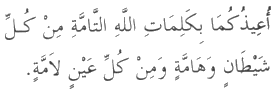
146. 'U'eethukumaa bikalimaatil-laahit-taammati min kulli shaytaanin wa haammatin, wa min kulli 'aynin laammatin. I seek protection for you in the Perfect Words of Allah from every devil and every beast , and from every envious blameworthy eye. Reference: Al-Bukhari4/119. It was narrated that Ibn 'Abbas (RA) said: The Prophet (Peace and Blessing upon Him) used to seek protection for Al-Hasan and Al- Husayn: "A'udhu bi kalimat-Allah il-tammah min kulli shaytanin wa hammah wa min kulli 'aynin lammah" I seek refuge in the perfect words of Allah from every devil and poisonous reptile, and from every envious evil eye. And he would say: "Your father (i.e., Ibrahim) used to seek protection by means of them (these words) for Isma'il and Ishaq." Sahih Al Bukhari, Kitab al Anbiya, 4/179. |
Invocations for visiting the sick
147. Laa ba'sa tahoorun 'inshaa'Allaah. Do not worry, it will be a purification (for you) , Allah willing. Reference: Al-Bukhari, cf. Al-Asqalani Fathul-Bari 10/118.
148. 'As'alullaahal-'Adheema Rabbal-'Arshil-'Adheemi 'an yashfiyaka. I ask Almighty Allah , Lord of the Magnificent Throne, to make you well. (Recite seven times in Arabic .) Reference: At-Tirmithi, Abu Dawud. See also Al-Albani, Sahih At-Tirmithi 2/210 and Sahihul-Jami' As-Saghir 5/180. |


What to say when you feel a pain in your body
243. Put your hand on the place where you feel pain and say:
Bismillaah. With the Name of Allah (three times). Then say : 'A'oothu billaahi wa qudratihi min sharri maa 'ajidu wa 'uhaathiru. I seek refuge in Allah and in His Power from the evil of what I find and of what I guard against. Reference: Muslim 4/1728. |

SOME DAILY ATHKAR
"اللَّهُمَّ صَلِّ وَسَلَّمْ عَلَى نَبِيِّنَا مُحَمَّدٍ".
99. Allahumma salli wa sallim 'alaa nabiyyinaa Muhammadin
Oh Allah, we ask you for peace and blessings upon our prophet Muhammad (Recite ten times in Arabic)
Reference:
The prophet (peace be upon him) said: "Who recites blessings upon me 10 times in the morning and 10 times in the evening will obtain my intercession on the Day of Resurrection." At-Tabrani reported this Hadith together with two chain of transmissions. One of them is reliable (Jayyid). See Haithami's Majma' Az-Zawa'id 10/120, and Al-Albani's Sahih At-Targhib Wat-Tarhib 1/273
"أَسْتَغْفِرُ اللهَ وَأَتُوبُ إِلَيْهِ".
97. 'Astaghfirullaaha wa 'atoobu 'ilayhi.
I seek the forgiveness of Allah and repent to Him. (Recite one hundred times in Arabic during the day .)
Reference:
Al-Bukhari, cf. Al-Asqalani, Fathul-Bari 11/101, Muslim 4/2075.
Subhaanallaah, Walhamdu lillaah, Wa laa 'ilaaha 'illallaah, Wallaahu 'Akbar and Wa laa hawla wa laa quwwata 'illaa billaah
Glorified is Allah, The praise is for Allah, There is none worth of worship but Allah, Allah is the Most Great and There is no power and no might except by Allah
Reference: Ahmad (no. 513) (Ahmad Shakir, ed.) and its chain of narration is authentic. See Majma'uz-Zawa'id 1/297. Ibn Hajar mentions it in Bulughul-Maram saying that Ibn Hibban and Al-Hakim considered it authentic.
Note: "Do not turn your homes into graveyards, surely the Devil flees from the house in which Surat Al-Baqarah is read," Muslim 1/539. The Devil is also driven out by the invocations for morning and evening, those that are said before sleeping and upon waking up, those for entering and leaving the house, including those for entering and leaving the mosque, and by many other authentic invocations taught to us by the Prophet (SAW) such as the reading of 'Ayatul-Kursi, (Al-Baqarah 2:255), and the last two 'Ayat of Surat Al-Baqarah before going to sleep. Whoever says: "There is none worthy of worship but Allah alone, Who has no partner, His is the dominion and His is the praise, and he is Able to do all things," one hundred times, it will be a protection for him from the Devil throughout the day.'
The Messenger of Allah (SWT) said: "Read Surah al-Baqarah, for to hold onto it is a blessing, abandoning it is a regret, and the sorcerers are unable to (memorise) it. (Muslim)
